
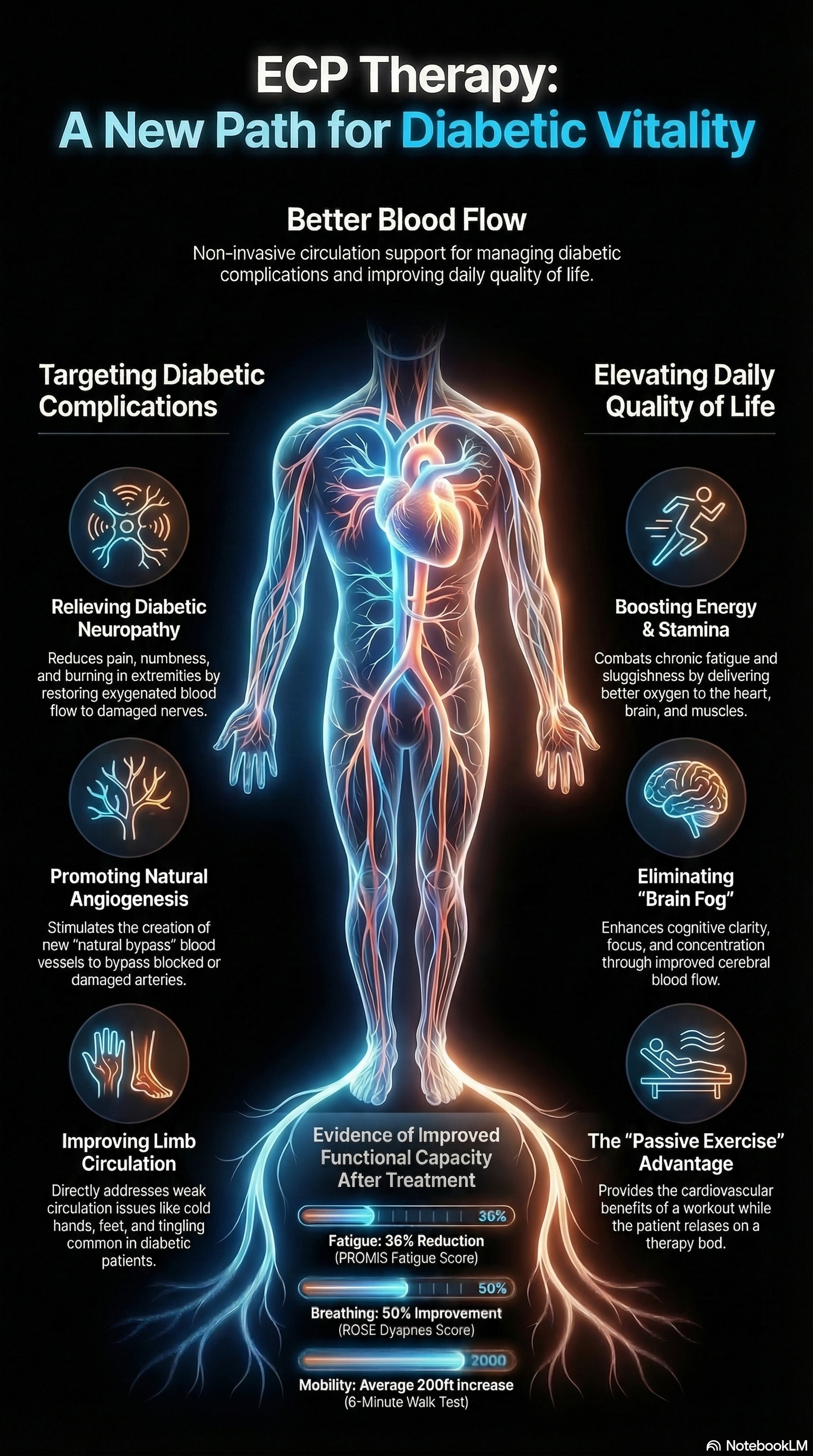
Potential Benefits of ECP Therapy for People with Diabetes:
While ECP therapy is not a replacement for diabetes medication or lifestyle changes, it has been shown to provide powerful complementary benefits:
Better blood sugar control
Clinical studies show reductions in HbA1c and glucose levels.
Improved insulin sensitivity
Helps the body use insulin more efficiently.
Enhanced circulation
Better blood flow supports tissues throughout the body, including nerves, heart, and kidneys.
Reduced inflammation and oxidative stress
Targets underlying processes that contribute to diabetic complications.
Improved vascular health
Supports healthier arteries and microcirculation.
Non-invasive and drug-free
ECP therapy is performed without surgery, injections, or anesthesia.
Long-lasting benefits
Studies show improvements in metabolic markers lasting months to years after treatment.
ECP Therapy For Diabetes
Diabetes is not only a blood sugar condition—it is also a vascular disease that damages circulation throughout the body. Reduced blood flow, chronic inflammation, and impaired blood vessel function contribute to many of the complications associated with diabetes, including heart disease, neuropathy, kidney problems, and poor wound healing.
Enhanced External Counterpulsation (ECP) therapy is a non-invasive treatment designed to improve circulation and vascular health. Emerging clinical research shows that it may also help improve blood sugar control, insulin sensitivity, and inflammation in people with diabetes.
The Science:
Clinical studies have demonstrated measurable metabolic improvements following ECP therapy.
Improved Blood Sugar Control
A randomized clinical trial found that patients with Type 2 diabetes undergoing ECP therapy experienced significant reductions in HbA1c, an important long-term marker of blood sugar control. Reductions averaged about 0.8% after seven weeks of treatment, and the improvements remained measurable even weeks after therapy ended.
Lower Fasting and Post-Meal Glucose
Research also shows that ECP therapy can reduce both fasting plasma glucose and post-meal glucose levels, indicating improved glucose metabolism.
Improved Insulin Sensitivity
Studies have found a 31% reduction in insulin resistance and more than 50% improvement in insulin sensitivity following ECP therapy—key markers for managing Type 2 diabetes.
Reduced Inflammation and Oxidative Stress
Chronic inflammation plays a major role in diabetic complications. ECP therapy has been shown to significantly decrease inflammatory cytokines, oxidative stress markers, and advanced glycation end products (AGEs)—molecules strongly associated with diabetic tissue damage.
Increased Nitric Oxide Production
ECP therapy increases nitric oxide availability, which improves blood vessel flexibility and helps regulate blood pressure and circulation—both critical for people with diabetes.